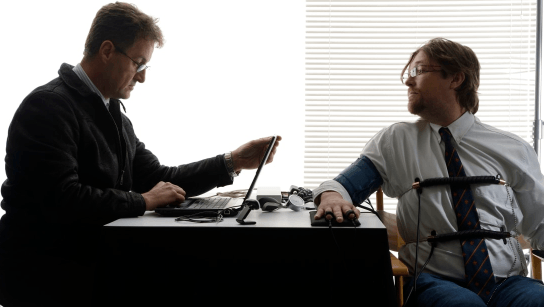
Most people think a polygraph test is a lie detector. You sit down, answer questions, and the machine tells whether you’re telling the truth. Simple, right?
Not quite.
The reality is messier, more human, and a lot less certain than movies make it seem.
Let’s dig into what a polygraph test actually does, why it’s still used, and where it quietly falls apart.
What a Polygraph Test Actually Measures
A polygraph doesn’t detect lies. It detects physiological changes.
That’s the first thing people often get wrong.
When you’re hooked up to a polygraph, the machine tracks things like your heart rate, breathing patterns, blood pressure, and skin conductivity (basically, how much you sweat). The idea is that when someone lies, they experience stress or anxiety, and that stress shows up in these signals.
Sounds reasonable on the surface.
But here’s the catch: stress doesn’t equal lying.
Imagine this: you’re sitting in a small room, wired up to a machine, being asked direct, sometimes uncomfortable questions by a stranger who’s trained to read your reactions. Even if you’re completely honest, your body might react.
Now flip it. Someone who’s used to high-pressure situations—say, a seasoned negotiator or even a practiced liar—might stay calm while being deceptive.
The polygraph isn’t reading your honesty. It’s reading your nerves.
How the Test Is Actually Conducted
The process is more structured than people expect.
It usually starts with a pre-test interview. This is where the examiner talks through the questions, establishes a baseline, and, importantly, sets expectations. They might explain how accurate the test is (sometimes overstating it) to make the subject take it seriously.
Then comes the actual test phase.
There are typically three types of questions:
- Relevant questions (about the issue being investigated)
- Control questions (broad, emotionally loaded ones like “Have you ever lied to someone you care about?”)
- Neutral questions (basic facts like your name)
The examiner compares how your body reacts to each type.
Here’s the logic: if your response to the relevant question is stronger than your response to the control question, you might be lying. If the opposite is true, you’re likely telling the truth.
It’s a clever setup. But it depends heavily on assumptions about human behavior.
And humans aren’t that predictable.
Why People Still Believe in It
Despite all the criticism, polygraph tests haven’t disappeared. In some fields, they’re still part of hiring or investigations.
Why?
Partly because they can work as a psychological tool.
Picture this: someone is told they’re about to take a highly accurate lie detector test. They’re nervous. They start thinking about what they’ve done, what might come up, what the machine will “see.”
That pressure alone can lead to admissions.
Not because the machine detected anything—but because the person cracked under the idea of being caught.
Law enforcement has used this effect for decades. The polygraph becomes less about measurement and more about leverage.
And sometimes, that’s enough.
The Accuracy Debate
Here’s where things get complicated.
Ask ten experts how accurate polygraph tests are, and you’ll get a range of answers. Some claim rates above 80%. Others argue it’s closer to chance in certain situations.
The problem is consistency.
Accuracy can depend on:
- The skill of the examiner
- The mental state of the person being tested
- The type of questions asked
- The context (criminal investigation vs. employment screening)
Even small changes in how a question is phrased can affect the outcome.
Let’s be honest—this isn’t what most people expect from something that’s often treated like a scientific verdict.
In fact, many courts don’t allow polygraph results as evidence. That alone says a lot.
Can People Beat a Polygraph?
Short answer: yes.
Longer answer: it’s not always easy, but it’s definitely possible.
There are known techniques—some simple, some more subtle—that can interfere with results. For example, deliberately increasing your stress during control questions (like biting your tongue or altering your breathing) can throw off the comparison the test relies on.
At the same time, staying calm during relevant questions can make deceptive answers look “clean.”
Now, not everyone can pull this off. It takes focus and a certain level of control over your reactions. But the fact that it’s even possible raises serious questions about reliability.
And here’s the uncomfortable part: people who are anxious, inexperienced, or overly worried about the process may actually perform worse—even if they’re telling the truth.
See also: Cryptopronetwork.Com Technology
Real-World Use: Where It Shows Up
You’ll still find polygraph tests in a few key areas.
Government agencies sometimes use them during background checks for sensitive positions. Certain law enforcement roles include them as part of hiring. And in some investigations, they’re used as an additional tool—not the final word.
There are also private uses. Some companies offer polygraph services for personal disputes, like infidelity accusations or internal business issues.
That’s where things can get murky.
Imagine a couple trying to resolve trust issues. One partner agrees to take a polygraph test to prove they’ve been faithful. If the result comes back “deceptive,” what does that actually mean?
It might confirm suspicions. Or it might just reflect anxiety, fear of being judged, or even the pressure of the situation.
Either way, the emotional impact is real.
The Human Factor: Why Results Can Mislead
Here’s the thing that often gets overlooked: the polygraph test isn’t just about the machine. It’s about the person taking it.
Some people get nervous easily. Others don’t.
Some feel intense guilt over small things. Others rationalize big ones without much internal conflict.
Two people could give the exact same answer to the same question—and their bodies could react in completely different ways.
That variability is hard to standardize.
Even the examiner plays a role. Their tone, body language, and how they phrase questions can subtly influence responses. A slight shift in how something is asked can change how it’s perceived—and how the body reacts.
It’s not a controlled lab environment. It’s a human interaction with a machine layered on top.
So Why Hasn’t It Disappeared?
You’d think something this debated would fade out over time.
But it hasn’t.
Partly because there isn’t a perfect alternative. Detecting deception is incredibly hard. Even advanced technologies struggle with it.
And partly because the polygraph still serves a purpose—just not always the one people assume.
It can:
- Encourage honesty through pressure
- Provide investigative leads
- Act as a deterrent
In other words, it’s less about proving truth and more about shaping behavior.
That might not sound as impressive, but in certain contexts, it’s useful.
A More Realistic Way to Look at It
If you treat a polygraph test as a definitive lie detector, you’re going to misunderstand it.
A better way to see it is as a tool that measures stress responses under questioning—and then interprets those responses using a set of assumptions.
Sometimes those assumptions hold.
Sometimes they don’t.
That doesn’t make the polygraph useless. But it does mean it should be handled with caution.
If you ever find yourself facing one, it helps to understand what’s really happening. You’re not being read like an open book. You’re being evaluated based on how your body reacts under pressure.
And pressure can come from a lot of places.
The Takeaway
The polygraph test sits in an odd space between science and psychology.
It looks technical. It feels authoritative. But underneath, it relies heavily on human behavior—messy, unpredictable, and deeply personal.
That’s why it sparks so much debate.
At its best, it can nudge people toward honesty or help guide an investigation. At its worst, it can misread anxiety as deception or give false confidence in shaky conclusions.
So if you hear someone say, “The polygraph proved it,” take that with a grain of salt.
The machine didn’t prove anything on its own. It just told a story about stress.
And stress, as we all know, doesn’t always tell the truth.