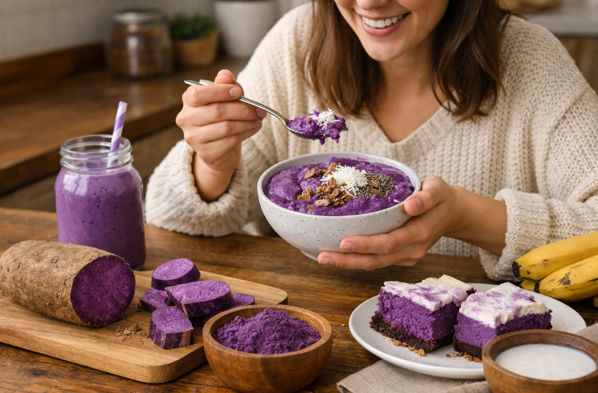
With its unmistakable deep violet hue and creamy texture, ube has gone far beyond traditional Filipino kitchens to find a place on health-conscious plates across Canada. But behind the Instagrammable lattes and pastries lies a tuber rich in nutrients and potential. Many are now asking: is ube just a passing food trend, or does it truly offer health benefits worth considering? From its antioxidant content to its place in balanced diets, ube sparks curiosity. This article takes a closer look at what makes it unique, how it compares to other root vegetables, and whether its rising popularity is matched by real nutritional value. Whether you’re a curious foodie or simply someone who wants to support their health naturally, you’ll find some real answers below.
What exactly is ube and why is it trending?
Ube is a purple yam (Dioscorea alata) that originates from Southeast Asia, particularly the Philippines. Known for its naturally vibrant colour and subtly sweet flavour, it has captured the attention of the culinary and wellness communities alike. In Canada, more people are turning to ube as a nutritious ingredient not only for baking but also for its potential health-boosting properties. Its growing popularity has even led to the rise of specialty retailers offering ube products such as powders and extracts made for easy incorporation into everyday meals.
This root vegetable is naturally rich in anthocyanins, the same antioxidant pigments found in blueberries and red cabbage. These compounds are often associated with reducing oxidative stress, supporting cellular health, and contributing to a more youthful, resilient body.
What sets ube apart from other root vegetables isn’t just its colour it’s the concentration of health-supporting compounds combined with low glycemic impact and fibre-rich composition. Whether you’re blending it into a smoothie or using organic ube powder to boost your breakfast bowl, its nutrient profile makes it a versatile option for anyone seeking to diversify their sources of fibre, antioxidants, and plant-based nutrients.
Does ube support digestion and gut health?
The digestive benefits of ube are largely linked to its high dietary fibre content. A diet rich in fibre contributes to:
- Healthy bowel regularity
- Improved gut microbiome balance
- Better blood sugar control
- Reduced appetite through increased satiety
Ube provides both soluble and insoluble fibre, which means it plays multiple roles in the digestive system. Soluble fibre helps slow digestion and can reduce blood sugar spikes after meals, while insoluble fibre supports the mechanical process of moving waste through the gut. This dual-action makes ube particularly appealing for those who want to support gut health naturally without relying on harsh fibre supplements.
How ube compares to other root vegetables
Compared to traditional white potatoes or even orange sweet potatoes, ube tends to have a lower glycemic index. That makes it a gentler choice for people who monitor their blood sugar levels, such as those living with prediabetes or type 2 diabetes. Moreover, the visually striking anthocyanins that give ube its purple colour also appear to play a role in gut barrier function and inflammation control two emerging areas of interest in digestive research.
Ube in everyday Canadian diets
Finding ube in local grocery stores used to be a challenge, but that’s changing. Today, you can find frozen ube, ube jams, or even pre-packaged ube powder in many natural food markets across Canada. This makes it easier to integrate this fibre-rich tuber into your meal prep even in simple oatmeal or as a healthy thickener for soups and sauces.
See also: The Critical Role of Disposable Supplies in Modern Healthcare
Can ube help with inflammation and immune support?
In recent years, researchers have shown greater interest in plant-based compounds that could contribute to inflammation regulation. While ube is not a medicine, its natural anthocyanin and polyphenol content has been shown in some studies to potentially reduce markers of chronic inflammation. The immune system, much like a well-oiled machine, depends on micronutrients, antioxidants, and digestive wellness to function properly. Ube provides small amounts of:
- Vitamin C
- B-vitamins like B6
- Potassium and magnesium
These nutrients contribute to maintaining electrolyte balance, supporting metabolism, and enabling immune cells to operate efficiently. Ube’s purple pigments a visual metaphor for its depth go beyond just looks. They help scavenge free radicals, which are unstable molecules that can damage cells and accelerate ageing. In this way, ube acts like a shield, protecting your body from internal stressors when included as part of a balanced diet.
How to add ube into your health routine
Incorporating ube into your meals can be both creative and beneficial. Whether you’re into baking, smoothies, or even savoury dishes, there are many ways to make room for this colourful tuber.
Easy ideas to enjoy ube at home
- Blend ube into protein smoothies
- Add ube powder to pancake or waffle mixes
- Use mashed ube as a natural food colouring for baking
- Mix it into chia pudding or overnight oats
- Combine with coconut milk for healthy desserts
Because of its low glycemic profile, ube makes an excellent substitute for higher-starch vegetables in many recipes. Just a tablespoon of ube powder can turn a plain snack into a functional food that’s both delicious and nutritious.
When shopping, look for organic ube powder from Canadian suppliers to ensure freshness and minimal processing. The taste is mildly sweet and earthy not overpowering making it ideal for health-conscious eaters who want to avoid added sugars.
Final thoughts and reflection
Ube stands out not only for its stunning appearance but for the nutritional value it quietly offers. With fibre, antioxidants, and a lower glycemic impact, it bridges the gap between traditional comfort food and modern wellness goals. For those exploring natural ways to support digestion, immunity, or simply add more colour and nutrients to their meals ube is well worth discovering.
Have you tried ube in your kitchen? We’d love to hear your favourite way to enjoy this purple gem.