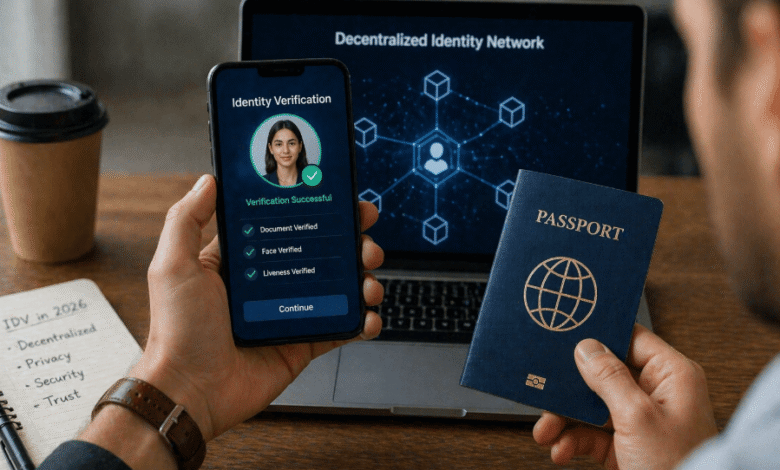
The rapid evolution of digital finance has reshaped how individuals and businesses interact. From decentralized finance (DeFi) platforms to global crypto exchanges, the ecosystem thrives on speed, accessibility, and borderless transactions. But alongside this growth comes a persistent challenge.
In an environment where users can transact anonymously and assets move instantly, verifying identities has become a foundational requirement rather than a regulatory afterthought. Identity Verification (IDV) sits at the intersection of security, compliance, and user experience, ensuring that digital platforms remain both open and safe.
For crypto-native audiences, IDV is no longer just about onboarding. it’s about enabling sustainable growth, preventing fraud, and aligning with an increasingly regulated global landscape.
What is Identity Verification (IDV)?
Identity Verification Solution (IDV) refers to the process of confirming that a person is who they claim to be. In digital environments, this is achieved through a combination of:
- Document verification (e.g., passports, national IDs)
- Biometric authentication (facial recognition, liveness detection)
- Database checks (government or credit bureau records)
Unlike traditional identity checks conducted in person, modern IDV is remote, automated, and real-time, making it ideal for digital-first industries like cryptocurrency, fintech, and online marketplaces.
Why IDV Matters More Than Ever in Crypto
1. The Rise of Financial Anonymity
Cryptocurrency was originally built on the principle of pseudonymity. While this offers privacy benefits, it also opens doors for misuse ranging from fraud and account takeovers to money laundering.
IDV introduces a layer of accountability without compromising the broader innovation of decentralized systems.
2. Increasing Regulatory Pressure
Global regulators are tightening compliance requirements for crypto platforms. Frameworks such as Anti-Money Laundering (AML) and Know Your Customer (KYC) are no longer optional.
Exchanges, wallets, and DeFi platforms are now expected to:
- Verify user identities
- Monitor transactions
- Report suspicious activity
Without robust IDV systems, platforms risk penalties, reputational damage, or even shutdowns.
3. Fraud Prevention at Scale
Crypto-related fraud continues to evolve from phishing attacks to synthetic identity fraud. IDV helps mitigate these risks by ensuring that:
- Fake identities are flagged early
- Bots and automated signups are blocked
- Account ownership is verified continuously
How Identity Verification Works
Modern IDV systems combine multiple technologies to create a seamless verification flow. While the exact process may vary across platforms, the core steps remain consistent.
Step 1: User Data Collection
Users submit basic information such as:
- Full name
- Date of birth
- Address
This data forms the foundation for further checks.
Step 2: Document Verification
Users upload a government-issued ID. Advanced systems analyze:
- Document authenticity
- Security features (holograms, fonts)
- Signs of tampering
AI-powered engines can verify thousands of document types globally within seconds.
Step 3: Biometric Authentication
To ensure the user is physically present, platforms use:
- Facial recognition
- Liveness detection (blink, head movement, 3D depth analysis)
This step prevents identity theft using stolen or forged documents.
Step 4: Database Cross-Checks
User data is cross-referenced against:
- Government databases
- Watchlists and sanctions lists
- Credit or telecom records
This ensures the identity is not only real but also compliant.
Step 5: Risk Scoring & Decisioning
Based on the collected data, the system assigns a risk score. The platform can then:
- Approve the user instantly
- Request additional verification
- Flag the account for review
Key Use Cases of IDV in Crypto & Fintech
Identity verification is no longer limited to onboarding. It now plays a role across the entire user lifecycle.
1. Exchange Onboarding
Crypto exchanges rely on IDV to:
- Verify new users
- Prevent duplicate accounts
- Ensure compliance with global regulations
A smooth onboarding experience can significantly impact user retention.
2. Wallet Security
Non-custodial and custodial wallets alike are integrating IDV to:
- Recover lost accounts
- Prevent unauthorized access
- Add an extra layer of authentication
3. DeFi Access Control
While DeFi aims to remain permissionless, certain protocols are introducing IDV layers for:
- Institutional participation
- Regulatory alignment
- Fraud mitigation
This hybrid approach balances decentralization with accountability.
4. NFT Marketplaces
IDV helps NFT platforms:
- Prevent wash trading
- Reduce fake listings
- Protect creators and buyers
5. Payment Gateways & Fiat On-Ramps
Platforms that bridge crypto and traditional finance must comply with strict regulations. IDV ensures:
- Secure fiat-to-crypto transactions
- Fraud prevention
- Compliance with banking standards
See also: 4 Tech Essentials to Help You Ace Your Dorm Life
Regulatory Relevance of IDV
As the crypto industry matures, regulation is becoming more structured and globally coordinated.
Global Compliance Standards
Authorities across regions are enforcing:
- AML (Anti-Money Laundering) requirements
- KYC (Know Your Customer) obligations
- Travel Rule compliance for crypto transactions
IDV is the backbone of these frameworks.
Regional Developments
- Europe: Markets in Crypto-Assets (MiCA) regulation emphasizes transparency and user verification
- United States: Increased scrutiny from regulatory bodies on exchanges and stablecoin issuers
- Asia-Pacific: Rapid adoption of digital identity frameworks integrated with financial services
The Shift Toward Continuous Verification
Regulators are moving beyond one-time checks. Businesses are now expected to:
- Monitor users throughout their lifecycle
- Detect suspicious behavior in real time
- Update risk profiles dynamically
Challenges in Identity Verification
Despite its importance, implementing IDV is not without challenges.
1. Balancing Security and User Experience
Complex verification processes can lead to:
- User drop-offs
- Friction during onboarding
The goal is to maintain strong security without compromising usability.
2. Global Coverage
Crypto platforms operate globally, requiring:
- Support for diverse document types
- Multilingual verification systems
- Region-specific compliance handling
3. Privacy Concerns
Users are increasingly aware of data privacy. Platforms must:
- Ensure secure data storage
- Comply with privacy regulations (e.g., GDPR)
- Be transparent about data usage
4. Evolving Fraud Techniques
Fraudsters are using:
- Deepfakes
- Synthetic identities
- AI-generated documents
IDV systems must continuously evolve to stay ahead.
How Modern Businesses Are Adopting IDV
The adoption of identity verification is no longer limited to large enterprises. Startups and emerging platforms are integrating IDV from day one.
1. API-Driven Integration
Modern IDV solutions offer APIs that allow businesses to:
- Integrate verification into apps and platforms
- Customize workflows
- Scale operations
2. AI-Powered Automation
Artificial intelligence enables:
- Faster verification times
- Higher accuracy rates
- Reduced manual intervention
3. Modular Verification Systems
Businesses can choose specific components such as:
- Document verification
- Biometric checks
- AML screening
This flexibility allows platforms to tailor IDV to their needs.
4. Continuous Monitoring
Beyond onboarding, businesses are implementing:
- Transaction monitoring
- Behavioral analysis
- Real-time risk assessment
The Future of Identity Verification
As digital ecosystems evolve, IDV is expected to become more sophisticated and user-centric.
1. Decentralized Identity (DID)
Users will have greater control over their identity data through:
- Self-sovereign identity systems
- Blockchain-based credentials
2. Reusable Digital Identities
Instead of verifying repeatedly, users may:
- Verify once
- Reuse credentials across platforms
3. Biometric Advancements
Future systems will rely more on:
- Behavioral biometrics (typing patterns, device usage)
- Passive authentication methods
4. Privacy-First Verification
Technologies like zero-knowledge proofs will enable:
- Verification without revealing sensitive data
- Enhanced privacy protection
Conclusion
Identity Verification (IDV) has become a cornerstone of trust in the digital economy, especially within the crypto and fintech sectors. As platforms strive to balance decentralization with accountability, IDV provides the necessary framework to ensure security, compliance, and user confidence.
From onboarding to continuous monitoring, its role continues to expand, shaping how businesses interact with users in a rapidly evolving landscape. While challenges remain, advancements in AI, biometrics, and decentralized identity models are paving the way for more seamless and secure verification processes.