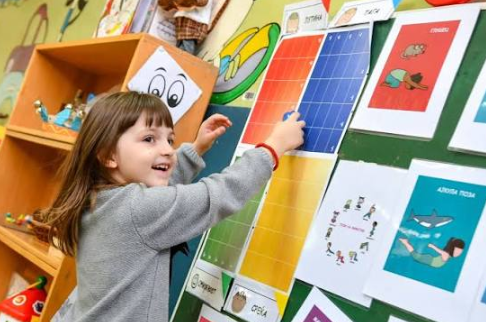
Children learn about the world through observation, exploration, conversation, and practical experiences. Although formal education plays an important role in development, learning does not need to happen only inside a classroom.
Everyday activities can provide opportunities to develop creativity, communication, problem-solving, and social skills. Parents can support children’s development by introducing enjoyable projects that combine entertainment with useful learning experiences.
The best activities are often simple, affordable, and suitable for a child’s age and interests.
Learning Through Reading
Reading is one of the most valuable activities for children. Books introduce new vocabulary, ideas, characters, and environments.
Young readers can begin with illustrated books containing short sentences and gradually move toward longer stories as their reading skills improve.
Parents can make reading more interactive by asking children questions about the characters and events.
For example, they might ask what a character could do differently or how the story might continue.
These discussions encourage children to think independently rather than simply remembering information.
Reading together also creates opportunities for family interaction and helps children develop positive learning habits.
See also: Your Finances for Unexpected Life Events
Encouraging Creativity Through Drawing
Drawing allows children to express ideas visually.
A blank sheet of paper can become a landscape, an imaginary animal, a colorful city, or an entirely fictional world.
Parents do not need expensive art supplies to encourage creativity. Basic pencils, crayons, paper, and washable colors can provide plenty of opportunities for experimentation.
Children can also participate in themed drawing activities.
For example, they might draw their favorite animals, create a picture of an imaginary home, or illustrate a scene from a story they have recently read.
The goal should be to encourage expression rather than judge artistic ability.
Introducing Simple Science Experiments
Science activities can make learning more engaging by allowing children to observe how things work.
Simple experiments involving water, light, plants, and everyday household materials can introduce basic scientific ideas.
For example, children can observe how different objects float or sink in water under adult supervision.
Another useful project involves planting seeds and recording their growth over several weeks.
These activities teach children to observe carefully, ask questions, and compare results.
Adults should choose age-appropriate experiments and supervise activities involving tools, heat, chemicals, or small objects.
Exploring Nature and Wildlife
Nature provides an excellent outdoor classroom.
Children can learn about trees, insects, flowers, birds, weather, and different environments through direct observation.
A visit to a park can become a simple educational adventure. Children might identify different leaves, photograph interesting plants, or record the birds they observe.
Parents can encourage curiosity by asking open-ended questions.
Why do some leaves change color? How do birds find food? Why do plants need sunlight?
These questions encourage children to investigate rather than simply memorize facts.
Respecting wildlife is equally important. Children should learn to observe animals from a safe distance and avoid disturbing their natural habitats.
Learning Through Imaginative Play
Imaginative play allows children to experiment with different roles and situations.
They might pretend to operate a shop, organize a classroom, explore an imaginary island, or lead a group of fictional adventurers.
These activities help develop communication, cooperation, and problem-solving skills.
Parents can encourage imaginative play by providing simple materials such as building blocks, cardboard boxes, drawing supplies, and costumes.
Animal characters are another popular source of inspiration.
Children who enjoy creating fictional animal adventures may explore Warrior Cat Name Ideas to discover creative character names for their imaginary stories.
This can lead to additional activities involving character descriptions, drawings, and storytelling.
Developing Skills Through Board Games
Board games offer opportunities to practice strategic thinking, patience, and cooperation.
Games involving matching, counting, memory, and problem-solving can be adapted to different age groups.
Children also learn how to follow instructions, take turns, and accept outcomes.
Parents should select games according to a child’s development level.
The goal is to make the experience enjoyable rather than create unnecessary pressure to win.
Family game nights can also become a regular tradition that encourages communication and shared entertainment.
Making Learning Fun Through Cooking
Cooking provides opportunities to introduce practical skills.
Children can help wash vegetables, measure ingredients, mix suitable mixtures, and arrange food under adult supervision.
These activities introduce basic mathematics through counting and measuring.
They can also encourage children to learn about ingredients, food groups, and kitchen safety.
Simple recipes are often the best starting point.
Preparing fruit salads, sandwiches, or homemade snacks can make cooking an enjoyable family activity.
Adults should handle sharp knives, hot surfaces, and other potentially dangerous equipment.
Building Communication and Social Skills
Group activities can help children develop confidence and learn how to interact with others.
Storytelling circles, group games, art projects, and simple team challenges encourage children to share ideas.
They also learn to listen, take turns, and cooperate toward common goals.
Parents can support these skills by creating opportunities for children to participate without forcing them into uncomfortable situations.
Encouragement and patience are important, particularly for children who need more time to become comfortable in social settings.
Using Technology for Educational Purposes
Technology can support learning when used thoughtfully.
Educational videos, interactive applications, digital drawing tools, and age-appropriate learning platforms can introduce children to new subjects.
However, digital activities should be balanced with physical play, reading, family interaction, and outdoor exploration.
Parents should review the content children access and establish suitable screen-time boundaries.
Technology works best as one part of a broader learning environment rather than the only source of entertainment.
Developing a Daily Learning Routine
Children benefit from routines that provide structure while allowing room for creativity.
A balanced schedule might include reading time, outdoor play, schoolwork, family activities, and periods of rest.
The schedule should be flexible enough to accommodate different interests and energy levels.
Parents can also allow children to choose certain activities themselves.
Giving children some control over their learning experiences can increase motivation and help them discover personal interests.
Why Encouragement Matters
Children may not succeed immediately when trying something new.
A drawing may not look exactly as expected, a science experiment may produce surprising results, or a story may need several attempts before it feels complete.
Parents should focus on effort, curiosity, and improvement rather than perfection.
Positive encouragement helps children develop confidence and become more willing to explore unfamiliar activities.
It also teaches them that mistakes are a normal part of learning.
Conclusion
Fun and educational activities help children develop important skills while discovering their interests.
Reading, drawing, science experiments, nature exploration, cooking, games, and imaginative play all provide valuable learning opportunities.
Parents do not need complicated equipment or expensive programs to encourage development. Simple activities, regular encouragement, and meaningful family interaction can make a lasting difference.
When learning feels enjoyable, children become more interested in exploring new ideas and developing their abilities.