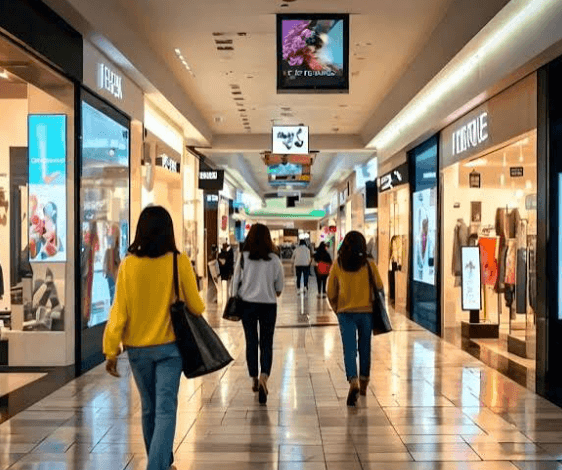
Shopping malls have evolved beyond places to buy products. They are social destinations where people eat, browse, meet friends, attend events, and spend meaningful amounts of time. For brands, that makes malls a valuable environment for reaching consumers when they are physically present, relaxed, and often open to discovering something new. Effective mall advertising can turn this environment into a powerful brand-building opportunity by placing a message directly into the consumer’s journey.
However, simply putting a logo and promotional message on a mall display is rarely enough. Shoppers encounter storefronts, digital screens, promotional displays, signs, and other brands throughout their visit. If an advertisement looks like everything else, it becomes easy to ignore. The challenge is to create an experience that earns attention without interrupting the customer’s shopping journey.
The most successful mall campaigns therefore combine strategic placement, creative design, contextual relevance, and measurable calls to action. Here are practical strategies brands can use to become more noticeable and memorable inside today’s competitive retail environments.
Why Mall Advertising Can Be So Effective
Mall advertising has one significant advantage over many traditional advertising channels: proximity to consumer behavior. Instead of reaching someone while they are commuting or scrolling through content, a mall campaign can influence consumers while they are already in a commercial environment.
Consider a sportswear brand advertising near a fitness center, a coffee brand positioned close to a cinema, or a technology company displaying an interactive product demonstration near an electronics retailer. The physical surroundings provide context that can make the advertisement more relevant.
Repeated exposure also matters. A shopper may see the same campaign when entering the mall, walking through a common area, and leaving later in the day. This repetition can strengthen brand recall without requiring an overly aggressive message.
Step-by-Step Strategies for Creating Unmissable Mall Campaigns
1. Start With the Shopper’s Journey
Before designing creative assets, map how people move through the mall.
Identify high-traffic entrances, escalators, elevators, food courts, parking areas, cinema zones, and major retail corridors. Each location serves a different purpose.
For example, an entrance placement may be ideal for broad brand awareness, while a display near a food court could work better for an offer that encourages immediate action.
Ask three questions:
- Where will shoppers see the advertisement?
- What will they likely be doing at that moment?
- How much time will they have to process the message?
A shopper walking past an escalator has only seconds to notice an advertisement. A person sitting in a food court may have several minutes. Your creative should reflect that difference.
2. Make the Creative Understandable in Seconds
Mall advertisements compete with environmental distractions, so simplicity is an advantage.
A strong advertisement usually has one primary message, one dominant visual idea, and a clear brand identifier. Avoid filling the design with lengthy explanations, multiple offers, or excessive product information.
For example, instead of:
“Save 25% on selected products from our latest seasonal collection when you purchase two or more qualifying items.”
A stronger headline might be:
“Your New Season Starts Here.”
The supporting details can then provide the offer, location, or call to action.
The goal is not to communicate everything. It is to communicate the most important thing quickly.
3. Use the Physical Environment as Part of the Idea
One of the biggest creative opportunities in mall advertising is the environment itself.
Rather than treating a billboard, column, escalator, or floor graphic as a simple advertising surface, consider how the physical structure can become part of the campaign.
A fitness brand could use an escalator installation to create the visual impression of climbing toward a healthier lifestyle. A luggage company could transform a walkway into a visual runway leading toward a travel destination.
These executions are memorable because the advertisement becomes part of the shopper’s surroundings rather than another rectangular message competing for attention.
4. Create Interactive Experiences
Interactive advertising can turn passive exposure into active participation.
Brands can use QR codes, touchscreens, augmented-reality experiences, product demonstrations, digital games, polls, or instant giveaways. The important point is that the interaction should support the campaign objective rather than exist simply because technology is available.
For example, a furniture brand could allow shoppers to scan a QR code and visualize different furniture configurations. A cosmetics company could offer a digital product-matching experience.
The best interaction answers a useful consumer question while creating a natural connection with the brand.
5. Connect Physical Advertising With Digital Action
Mall advertising becomes more measurable when the physical experience leads somewhere digitally.
A QR code can direct shoppers to a product page, coupon, store locator, competition, booking form, or campaign landing page. A short, memorable URL can serve a similar purpose.
However, avoid sending people to a generic homepage when a more relevant destination exists. If the advertisement promotes a particular product, the QR code should ideally lead directly to that product or campaign.
For example, a restaurant promoting a limited-time menu could link directly to the menu and reservation page rather than its general website.
6. Adapt Creative to Different Times and Audiences
Mall audiences change throughout the day and week. Weekday mornings may attract commuters and professionals, while evenings and weekends can bring families, students, and leisure shoppers.
Digital displays make it possible to adapt messaging according to these patterns.
A restaurant might promote breakfast during morning hours, lunch offers around midday, and family dining in the evening. A retailer could promote weekday professional clothing and weekend family shopping.
Contextual relevance makes the same advertising space more useful without requiring a completely different campaign.
Common Mistakes That Reduce Mall Advertising Performance
One frequent mistake is prioritizing aesthetics over communication. A visually beautiful advertisement can still fail if shoppers cannot understand the message quickly.
Another problem is poor placement. A campaign may have excellent creative but receive limited attention because it is positioned in an area with low dwell time or heavy visual clutter.
Brands also sometimes include too many calls to action. “Visit us,” “Scan now,” “Follow us,” “Download the app,” and “Get 20% off” can compete with one another. Choose the action that matters most.
Finally, don’t assume exposure automatically equals success. Without defined objectives and measurement methods, it becomes difficult to determine whether the campaign generated awareness, visits, leads, sales, or digital engagement.
Practical Tips From an Advertising Perspective
Before launching a campaign, establish a measurable objective. Brand awareness campaigns might track reach, frequency, and recall, while performance-oriented campaigns can monitor QR scans, coupon redemptions, website sessions, store visits, or conversions.
Use consistent branding across physical and digital touchpoints. The colors, typography, messaging, and visual identity should feel connected when someone moves from the mall advertisement to the brand’s website or social media profile.
Test the message before committing to a large campaign. Show the creative to people unfamiliar with the campaign and ask what they remember after a few seconds. If they remember the design but cannot identify the brand or offer, the creative needs refinement.
It is also worth analyzing the digital destination connected to the campaign. A compelling physical advertisement can lose effectiveness if the landing page is slow, confusing, or poorly optimized for mobile users. Tools such as AudEsto can help marketers audit a website or individual page and generate a downloadable SEO report, making it easier to identify technical and on-page issues before directing campaign traffic there.
Most importantly, treat mall advertising as part of an integrated marketing strategy rather than an isolated channel. Combine physical visibility with search, social media, email, mobile experiences, and in-store activity where appropriate.
See also: Transforming Automotive Business Operations Through Modern Office Solutions
Conclusion
Making a brand unmissable inside a mall is not simply about buying the biggest advertising space. It is about understanding the shopper, choosing the right moment, simplifying the message, and creating an experience that feels relevant to the environment.
The strongest campaigns use location strategically, make creative instantly understandable, encourage meaningful interaction, and connect physical exposure with measurable digital action. When these elements work together, mall advertising can move beyond basic visibility and become a memorable part of the customer’s shopping experience.